When you source wiper blades from a factory, price tells you very little. Quality does not come from a single inspection at the end of the line—it comes from a manufacturing system built around recognized standards. For B2B buyers, understanding these standards is the difference between a reliable supplier and a costly liability.
This guide breaks down the key wiper blade quality standards that matter for importers, distributors, and OEM programs: IATF 16949 (management system), SAE J903 (wiper performance), and ASTM B117 (corrosion testing)—and how to verify that a factory actually meets them.
1. Why Quality Standards Matter in Wiper Blades
A wiper blade is a simple product with a demanding job. It must perform across a temperature range of -40°C to +80°C, survive years of UV exposure and ozone, and clear water, ice, and debris without smearing or chattering—often for 12–24 months of daily use.
When a batch fails, the cost is not the replacement blade. It is:
- Warranty claims from end customers
- Returns and freight costs for the importer
- Brand damage in a market that takes years to build
Certifications and test standards exist to make quality measurable, repeatable, and auditable—not just promised.
2. The Standards Matrix: What Each One Actually Covers
| Standard | Type | What It Verifies | Who Needs It |
|---|---|---|---|
| IATF 16949 | Quality management system | Full production process control: design, manufacturing, inspection, traceability | OEM programs, tier-1 suppliers, serious importers |
| ISO 9001 | Quality management system | General process quality, customer focus, continuous improvement | Most B2B suppliers |
| SAE J903 | Performance test | Wipe quality, blade life (cycles), noise, glass clearance | Aftermarket buyers, distributors |
| ASTM B117 | Corrosion test | Salt-spray resistance of frames and metal components | Coastal markets, winter-salt regions |
| ISO 4892 / QUV | Weathering test | UV and ozone resistance of rubber and coatings | Hot-climate markets, OEM programs |
Key distinction: IATF 16949 and ISO 9001 certify the system (how the factory operates). SAE J903, ASTM B117, and weathering tests certify the product (what the blade actually withstands). A serious supplier should hold both—the system certificate and the test reports.
3. IATF 16949: The Automotive Gold Standard
IATF 16949 is the global technical specification for quality management in the automotive supply chain. It builds on ISO 9001 and adds automotive-specific requirements: product safety, traceability, control plans, and production part approval (PPAP).
What IATF 16949 Means for Your Sourcing:
- Process control, not spot checks. The factory must prove that every batch is produced under controlled parameters—rubber compounding, extrusion, coating, and assembly.
- Full traceability. If a defect is found in market, the factory must trace the raw material batch, production shift, and machine. This is critical for recalls and claim disputes.
- Audited, not self-declared. Certification requires third-party audits (e.g., by an IATF-recognized certification body) and annual surveillance audits.
- Continuous improvement. The system requires the factory to measure defect rates, scrap rates, and customer complaints—and demonstrate year-over-year improvement.
Buyer tip: Always ask for the supplier’s IATF 16949 certificate number and verify it on the certification body’s public database. A surprising number of “IATF-certified” claims are expired, suspended, or belong to a different company in the same group.
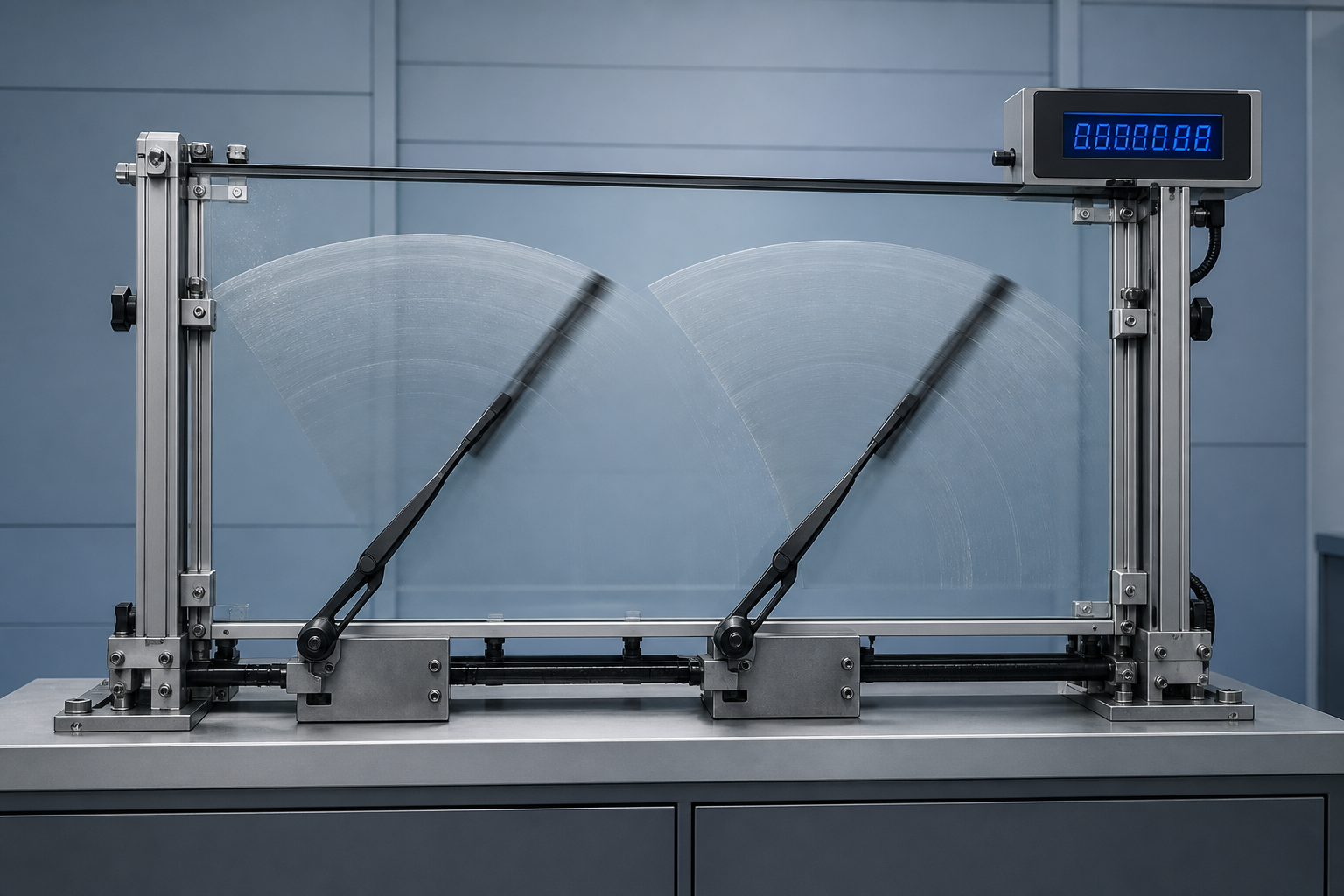
4. SAE J903: Measuring Wipe Performance
SAE J903 is the North American standard for automotive wiper blade performance. It defines how blades are tested for:
- Wipe quality: Streaks, smears, and water sheeting left after a pass
- Durability: Number of wipe cycles before failure (common targets: 1–1.5 million cycles on glass simulators)
- Noise: Chatter and squeal levels during wet and dry operation (YIKE blades are engineered to stay under the 35 dB threshold)
- Aerodynamic lift: Resistance to wind lift at highway speeds (critical for flat blades)
When a factory claims “meets SAE J903,” request the test report. The report should show cycle counts, test conditions, and the testing standard version.
5. ASTM B117: Corrosion Resistance That Survives Real Markets
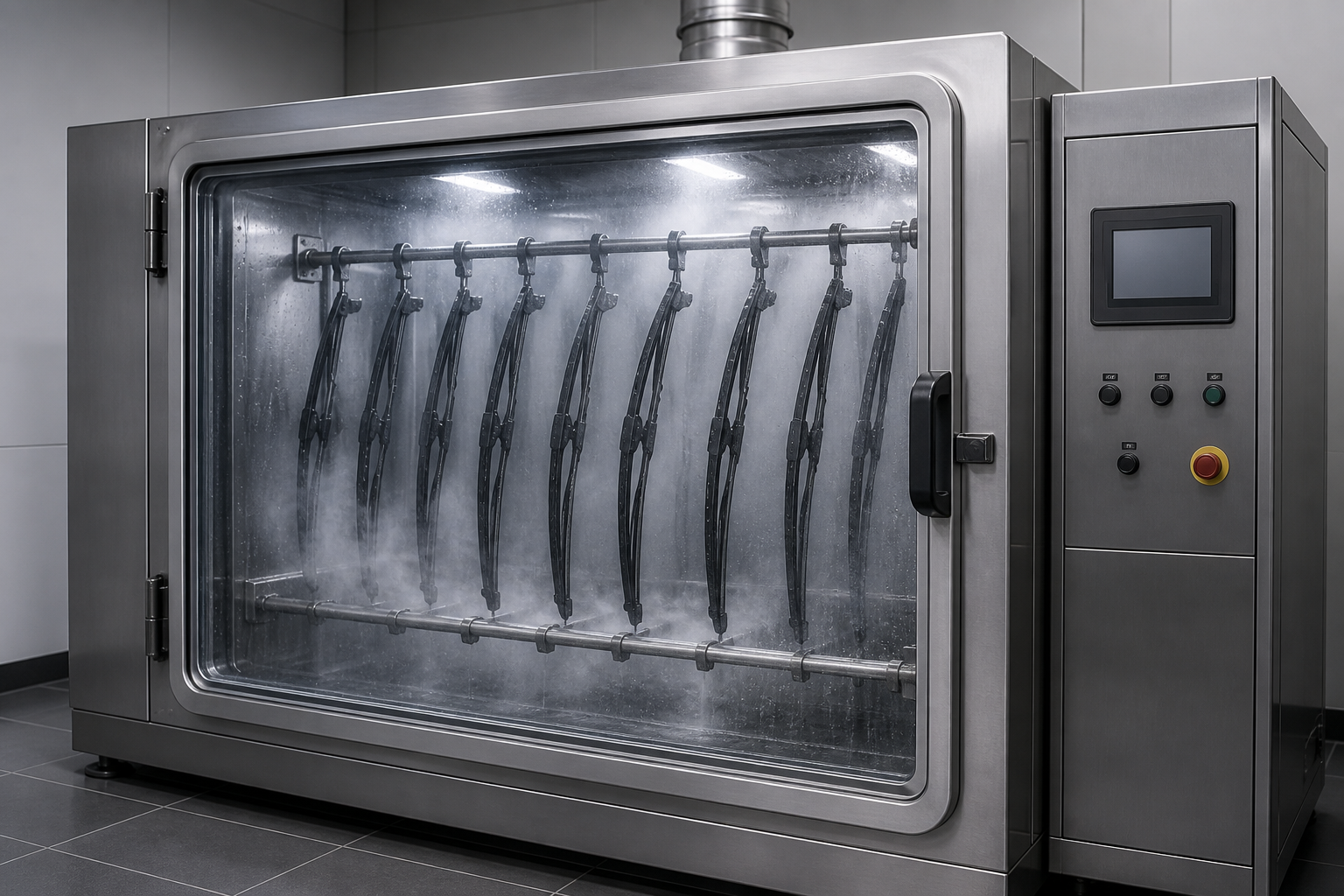
ASTM B117 is the most widely used salt-spray (fog) test standard. Blades are placed in a controlled salt-fog chamber for a set number of hours—typically 48, 72, or 96 hours—and then evaluated for corrosion on metal frames, rivets, and springs.
Why This Matters for Your Markets:
- North America & Northern Europe: Road salt in winter aggressively corrodes unprotected metal frames.
- Coastal regions: Humidity and salt air attack blades year-round.
- Premium positioning: A blade that passes 72+ hours of salt spray can be marketed as “corrosion-resistant” and justifies a higher price point.
YIKE example: Our hybrid and flat blade frames use multi-layer anti-corrosion coating (zinc plating + passivation + topcoat), validated in 96-hour ASTM B117 salt-spray tests.
6. How to Verify a Factory’s Quality Claims (Checklist for Buyers)
Before placing a bulk order, run this verification checklist:
| Check | What to Request | Red Flags |
|---|---|---|
| System certificate | IATF 16949 / ISO 9001 certificate with valid date and correct legal entity | Expired, suspended, or name mismatch |
| Test reports | SAE J903 wipe/durability report, ASTM B117 salt-spray report | Reports without lab name, date, or sample specs |
| In-house lab | Photos/video of on-site testing equipment | Factory outsources 100% of testing |
| PPAP capability | Control plan and inspection records for a sample product | No documentation available |
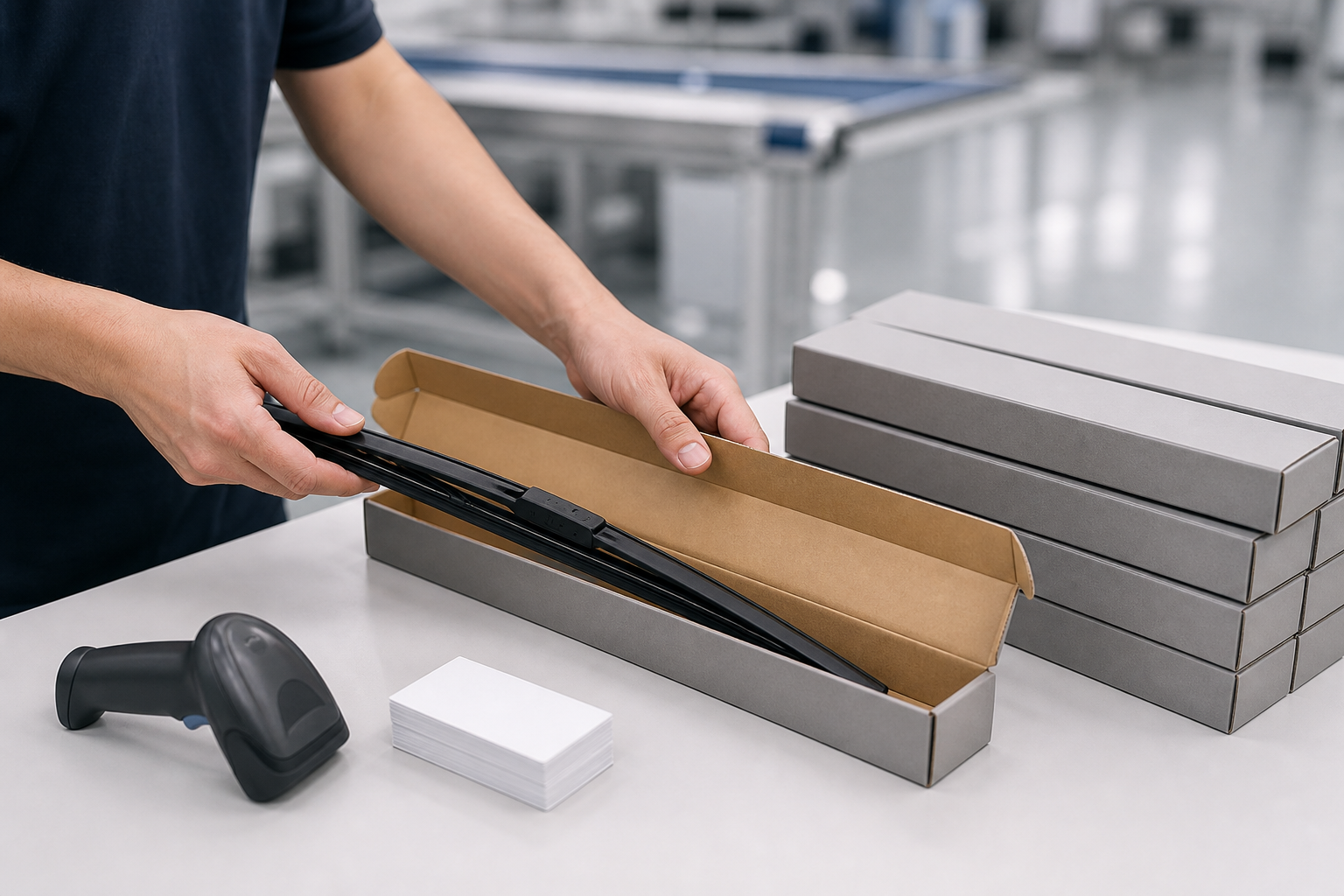
| Traceability | Batch coding on blades and packaging | No batch marks anywhere |
| Customer references | Existing OEM or distributor references | References cannot be verified |
7. What This Means for Your Product Line Strategy
Quality standards should drive your SKU decisions, not just your supplier selection:
- Standard line (ISO 9001 factory, SAE J903 tested): Price-competitive, for markets with low quality claims and fast turnover.
- Premium line (IATF 16949 factory, J903 + B117 + UV tested): Higher price point, longer warranty, for winter-salt and coastal markets. Browse our hybrid wiper blades and flat wiper blades for corrosion-resistant frame options.
- OEM programs (IATF 16949 + PPAP): Requires full documentation and traceability—only IATF-certified factories qualify.
Most importers under-prioritize corrosion and weathering testing because they “only sell standard blades.” But in markets like the UK, Spain, and the Gulf—our key focus regions—weather and road-salt conditions make these tests the difference between repeat orders and returned containers.
8. Conclusion: Certifications Are Your First Quality Filter
Quality in wiper blades is not a mystery—it is measurable against international standards. A factory that holds IATF 16949, publishes SAE J903 and ASTM B117 test results, and invites buyers to audit its lab is a factory that treats quality as a system, not a slogan.
At Zhejiang Yike Auto Parts Co., Ltd., we are IATF 16949:2016 certified and operate our own compounding laboratory and testing equipment. We provide test reports and batch traceability for every order—because your reputation depends on our consistency.
Request Our Quality Documentation & Lab Reports →
Frequently Asked Questions
Q: Is ISO 9001 enough for importing wiper blades? A: For basic aftermarket distribution, ISO 9001 is a reasonable minimum. For OEM programs, warranty-heavy markets, or long-term brand building, IATF 16949 is strongly recommended.
Q: Can I request customized test levels? A: Yes. YIKE supports custom test parameters—extended salt-spray hours, UV weathering duration, and wipe-cycle targets—tailored to your target market’s conditions.
Q: How do I know the certificate is authentic? A: Ask for the certificate number and the certification body’s name, then verify on the body’s public database. Also confirm the legal entity on the certificate matches your contract supplier.
Q: Do YIKE blades carry batch traceability? A: Yes. Every production batch is coded and traceable to raw material lots, enabling rapid root-cause analysis if any issue arises in the field.
For wholesale and OEM inquiries, contact: Email: larissa@ytwiper.com WhatsApp: +86 15356361113 Web: https://yikewiper.com