When sourcing wiper blades for global markets, the single most critical component determining longevity and performance is the rubber material. For B2B buyers—distributors, automotive retailers, and fleet managers—choosing the right compound isn’t just about price; it’s about minimizing warranty claims and ensuring road safety in extreme climates.
At Zhejiang Yike Auto Parts Co., Ltd., we operate our own in-house compounding laboratory to engineer high-performance rubber solutions. This guide provides a technical comparison of the industry’s leading materials to help you optimize your procurement strategy.
1. Why Material Science Matters in Wiper Blades
A wiper blade’s “edge” is subject to immense stress: frictional wear against glass, UV radiation, ozone degradation, and temperature swings from -40°C to +80°C. If the material choice is incorrect, the blade will crack, harden, or chatter within months.
Key Performance Indicators (KPIs) for Rubber:
- Tear Strength: Resistance to nicks and cuts from debris.
- Compression Set: Ability to return to its original shape after resting in one position.
- Coefficient of Friction: Determined by surface coatings like graphite or Teflon.
- Ozone Resistance: Prevention of surface “checking” or micro-cracks.
2. Natural Rubber (NR): The Industry Standard
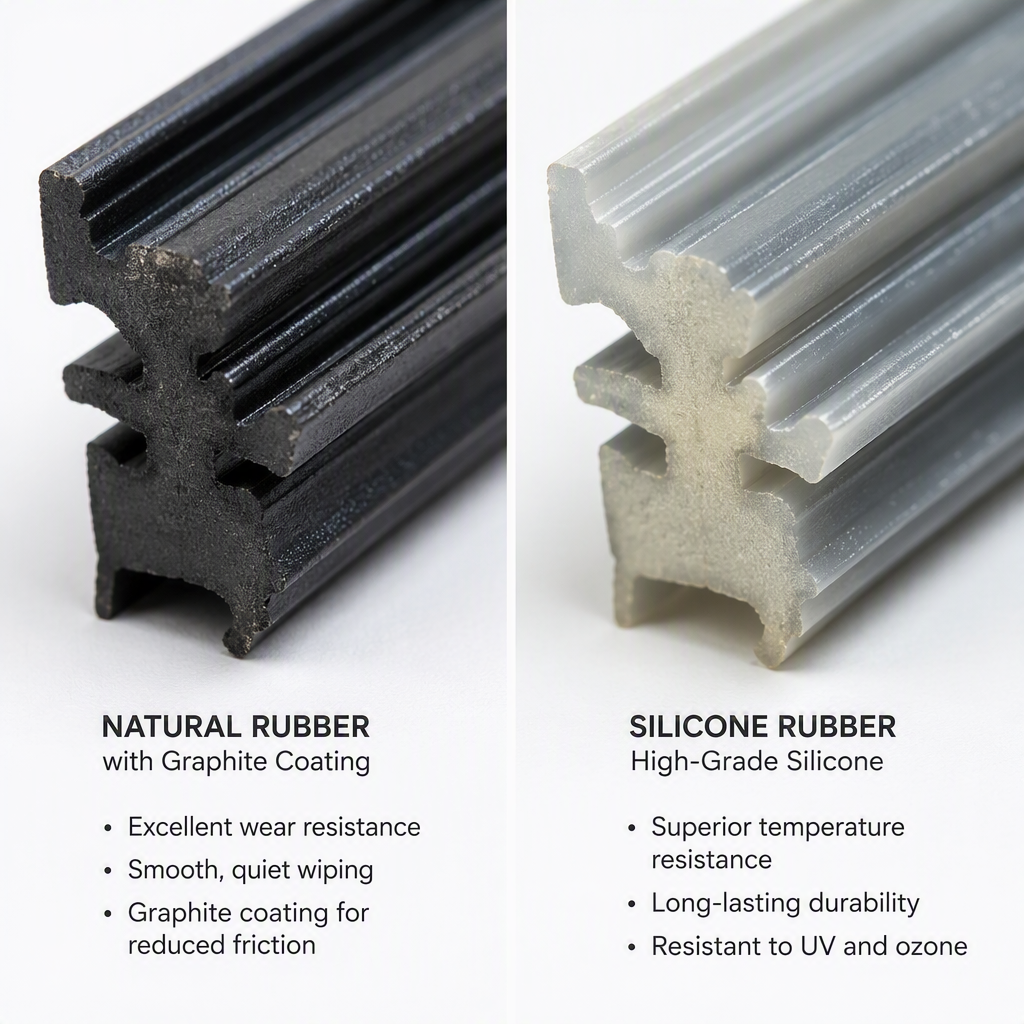
Natural rubber remains the most common material for OE and aftermarket wiper blades due to its exceptional elasticity and cost-efficiency.
Advantages:
- Superior Elasticity: NR provides a smooth, quiet wipe at standard temperatures.
- Cost-Effectiveness: Ideal for high-volume wholesale and budget-conscious retail.
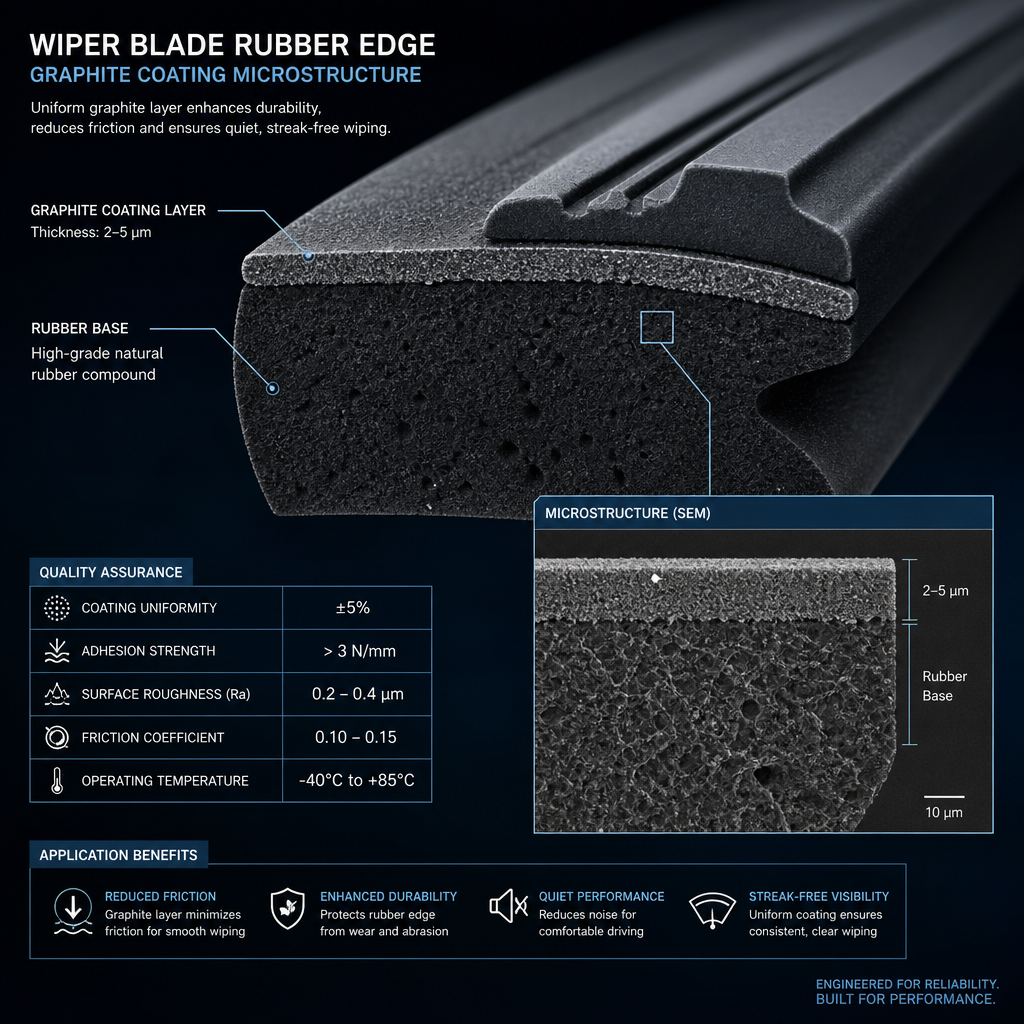
- Graphite Compatibility: NR easily accepts graphite coatings, which slash noise levels to ≤35 dB.
Limitations:
- UV/Heat Sensitivity: Untreated natural rubber degrades faster under direct tropical sun.
- Cold Hardening: Becomes brittle in extreme polar climates without specialized additives.
YIKE’s Innovation: We use a modified NR compound with high-concentration anti-ozonants to extend the lifespan of natural rubber by 40% compared to standard generic blades.
3. Silicone Rubber: The Premium Choice
Silicone has gained massive traction in developed markets (USA, Northern Europe, Japan) as the go-to “premium” upgrade.
Advantages:
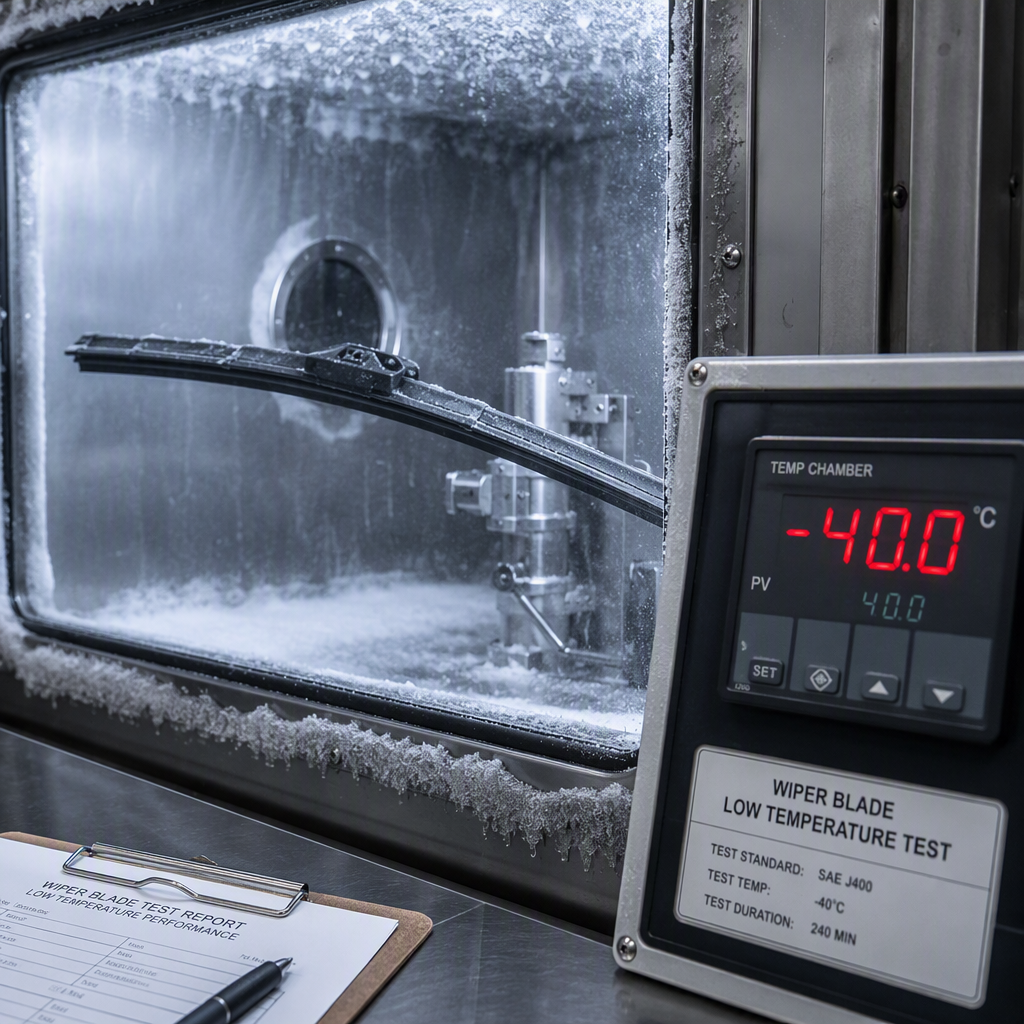
- Extreme Temperature Range: Remains fully flexible from -40°C to +150°C. It is the only reliable choice for Canadian winters or Gulf summers.
- Water Repellency: Silicone naturally leaves a hydrophobic film on the windshield, causing water to bead and roll off at highway speeds.
- Unrivaled Longevity: Lasts 2–3 times longer than standard natural rubber.
Limitations:
- Higher Unit Cost: Typically 50–80% more expensive than NR.
- Friction Management: Requires advanced surface treatments to prevent juddering on dry glass.
4. Technical Comparison Table
| Feature | Premium Natural Rubber (YIKE NR+) | Professional Silicone Rubber |
|---|---|---|
| Longevity | 6–9 Months | 12–24 Months |
| Wipe Quality | Excellent (Quiet) | Good (Hydrophobic) |
| Cold Resistance | Flexible to -20°C | Flexible to -40°C |
| UV Resistance | High (Additive Treated) | Exceptional (Inherent) |
| Best Market | High-Volume Retail / OEM | Premium Aftermarket / Arctic / Desert |
| Price Point | Competitive / Mid-Range | Premium |
5. The YIKE Advantage: In-House Compounding
Most wiper factories buy pre-extruded rubber strips from third-party suppliers. This creates a “black box” in the supply chain—the manufacturer cannot guarantee the chemical purity of the material.
At Zhejiang Yike Auto Parts, we control the recipe.
1. Raw Material Sourcing: We source natural rubber exclusively from IATF-vetted plantations.
2. Precision Mixing: Our lab precisely calibrates the ratio of carbon black, accelerators, and anti-aging agents.
3. Graphite Infusion: We apply a proprietary graphite coating that is baked into the rubber surface, ensuring it doesn’t rub off after the first few thousand cycles.
6. How to Choose for Your Target Market
Scenario A: Northern Europe, Canada, Russia
Recommendation: 100% Silicone or specialized -40°C NR blends.
Focus on: Preventing hardening and snapping in sub-zero temperatures.
Scenario B: Middle East, Australia, Africa
Recommendation: UV-Stabilized NR or Silicone.
Focus on: Heat resistance and preventing material “melting” or cracking under high UV index.
Scenario C: Southeast Asia, South America
Recommendation: High-durability Natural Rubber.
Focus on: Tear resistance during frequent, heavy monsoon rain.
7. Conclusion: Quality Starts with Chemistry
A wiper blade is only as good as its rubber compound. By understanding the trade-offs between Natural Rubber and Silicone, B2B buyers can curate a product range that hits the right balance of margin and reliability.
At YIKE, we provide technical data sheets for all our materials to ensure full transparency for your procurement team.
Request Rubber Material Samples & Lab Reports →
Frequently Asked Questions
Q: Can I get silicone refills for my existing bracket frames?
A: Yes, YIKE produces universal silicone refills that fit most 6mm/8mm traditional frames, allowing you to offer a “premium upgrade” to your customers without changing the entire blade.
Q: Is “Synthetic Rubber” the same as Silicone?
A: Not necessarily. Most “synthetic” blades are EPDM-based. While EPDM has good weather resistance, silicone offers superior water beading and cold-weather performance.
Q: How do I verify the graphite coating quality?
A: Conduct a simple “rub test” with a white cloth. Minimal residue should transfer. Alternatively, request a noise test report from our acoustic laboratory.
For wholesale and OEM inquiries, contact:
Email: larissa@ytwiper.com
WhatsApp: +86 15356361113
Web: https://yikewiper.com